
Luke 24:13-35 · Third Sunday of Easter
That very day, the first day of the week, two of Jesus’ disciples were going to a village seven miles from Jerusalem called Emmaus, and they were conversing about all the things that had occurred. And it happened that while they were conversing and debating, Jesus himself drew near and walked with them, but their eyes were prevented from recognizing him. He asked them, “What are you discussing as you walk along?” They stopped, looking downcast. One of them, named Cleopas, said to him in reply, “Are you the only visitor to Jerusalem who does not know of the things that have taken place there in these days?” And he replied to them, “What sort of things?” They said to him, “The things that happened to Jesus the Nazarene, who was a prophet mighty in deed and word before God and all the people, how our chief priests and rulers both handed him over to a sentence of death and crucified him. But we were hoping that he would be the one to redeem Israel; and besides all this, it is now the third day since this took place. Some women from our group, however, have astounded us: they were at the tomb early in the morning and did not find his body; they came back and reported that they had indeed seen a vision of angels who announced that he was alive. Then some of those with us went to the tomb and found things just as the women had described, but him they did not see.” And he said to them, “Oh, how foolish you are! How slow of heart to believe all that the prophets spoke! Was it not necessary that the Christ should suffer these things and enter into his glory?” Then beginning with Moses and all the prophets, he interpreted to them what referred to him in all the Scriptures. As they approached the village to which they were going, he gave the impression that he was going on farther. But they urged him, “Stay with us, for it is nearly evening and the day is almost over.” So he went in to stay with them. And it happened that, while he was with them at table, he took bread, said the blessing, broke it, and gave it to them. With that their eyes were opened and they recognized him, but he vanished from their sight. Then they said to each other, “Were not our hearts burning within us while he spoke to us on the way and opened the Scriptures to us?” So they set out at once and returned to Jerusalem where they found gathered together the eleven and those with them who were saying, “The Lord has truly been raised and has appeared to Simon!” Then the two recounted what had taken place on the way and how he was made known to them in the breaking of bread.
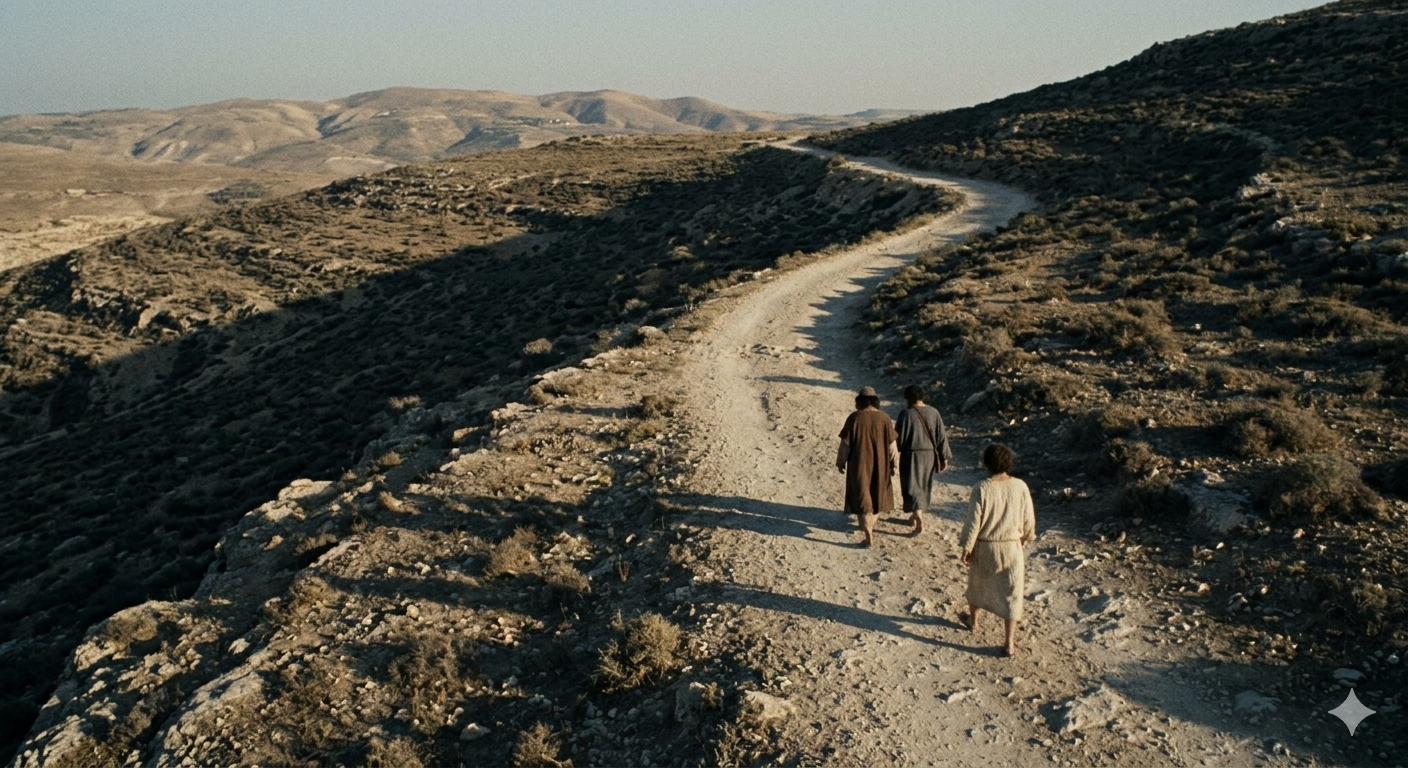
They were walking away.
That’s the detail that gets me every time. It’s three days after the crucifixion. The women have already reported the empty tomb. The disciples have already gone to check and found things just as the women described. And these two — Cleopas and whoever was with him — are walking in the wrong direction. Away from Jerusalem. Away from the community. Away from whatever is still unfolding.
Seven miles to Emmaus. That’s a long walk with a broken heart.
And Jesus falls into step beside them.
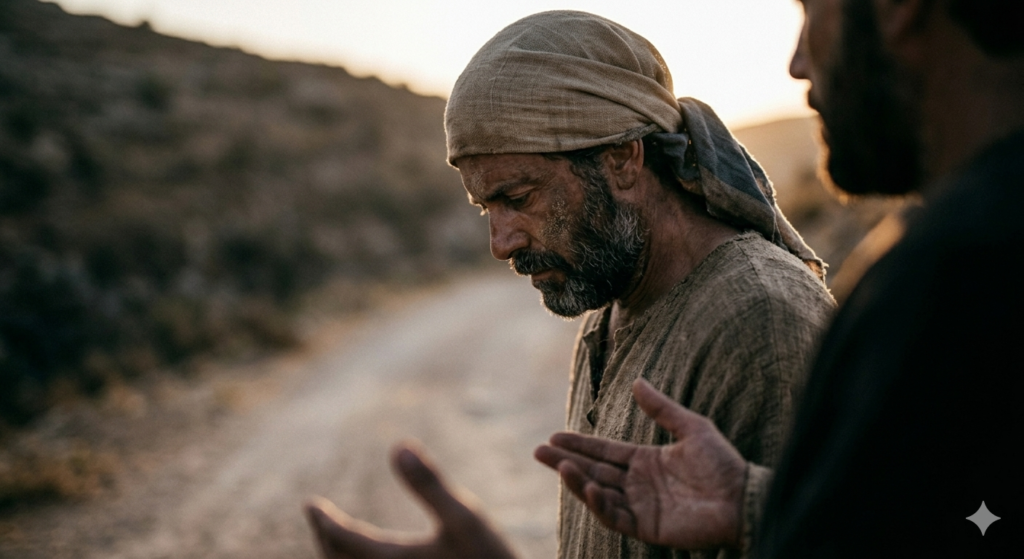
They don’t recognize him. Luke tells us their eyes were prevented from recognizing him — which is one of the stranger lines in all the gospels. Not that they failed to look carefully enough. Not that Jesus looked different. Their eyes were prevented. Something was keeping them from seeing what was right in front of them.
He asks what they’re talking about.
They stop walking. Looking downcast, Luke says. And Cleopas says something that has always struck me as almost funny in its devastation: Are you the only visitor to Jerusalem who doesn’t know what happened?
The only one who doesn’t know. Said to the only one who does.
They tell him everything. The crucifixion. The hope they had carried — we were hoping he would be the one to redeem Israel. That past tense. Were hoping. Hope in the past tense is one of the saddest constructions in any language. The thing you wanted so badly that you have to speak of it now as something that used to be true.
And then: the women. The empty tomb. The angels. But him they did not see.
Jesus listens to all of it. And then he opens the scriptures to them — from Moses through all the prophets, explaining everything that referred to him. For seven miles they walk and he talks and something starts happening inside them that they won’t name until later.
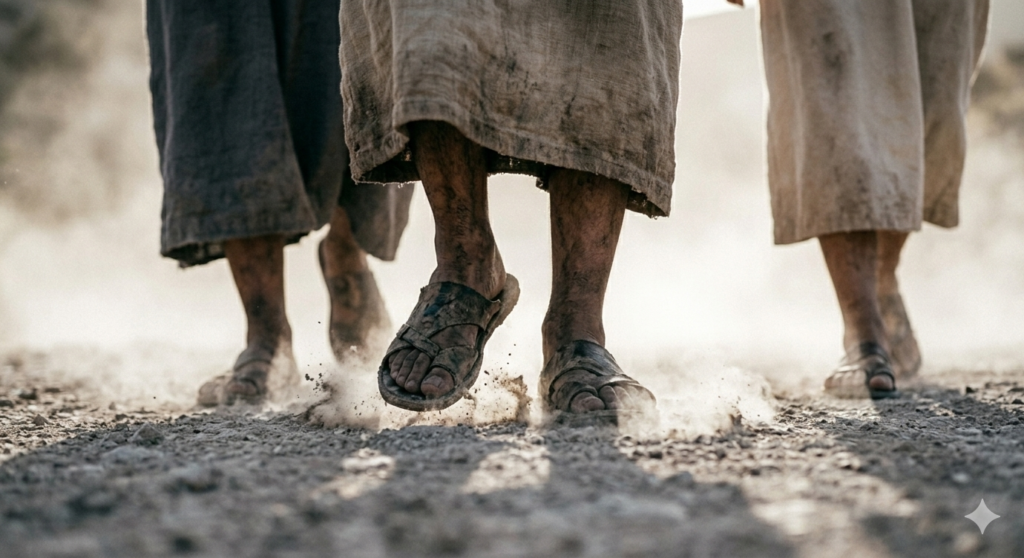
They reach Emmaus. He acts as if he’s going on further.
And they ask him to stay.
Stay with us. It is nearly evening. The day is almost over.
So he goes in.
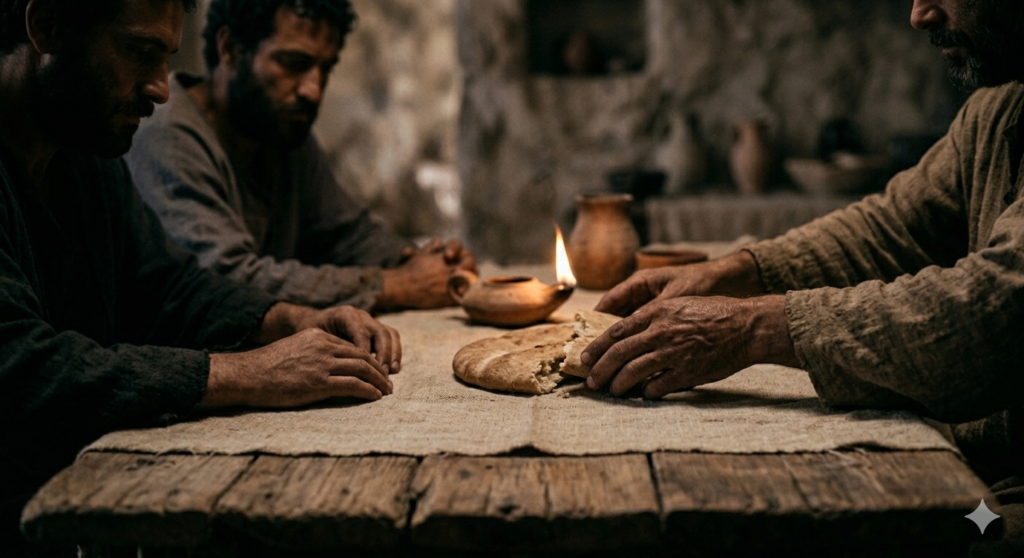
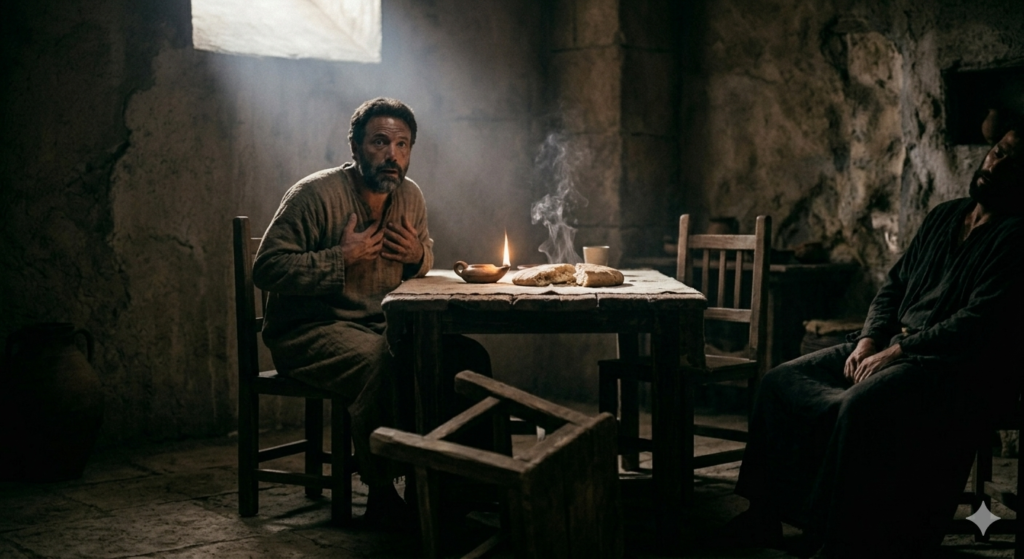
They sit down to eat. He takes the bread. Says the blessing. Breaks it. Gives it to them.
And their eyes are opened.
He vanished from their sight. And the first thing they said to each other wasn’t about the miracle. It was about the walk. Were not our hearts burning within us while he spoke to us on the way?
They had felt it the whole time and hadn’t known what it was.
That’s the thing about this story that stays with me longest. The recognition didn’t come when they were looking for it. It came at a table. In the breaking of bread. In the most ordinary gesture of a meal. And the moment they recognized him — he was gone.
But something had changed. They got up immediately. Walked the seven miles back to Jerusalem. In the dark. Because you don’t sit still after something like that.
We are always, in some way, on the road to Emmaus. Walking away from something we’re grieving. Talking through what we’d hoped for. Not recognizing what’s walking beside us.
The story doesn’t promise we’ll see clearly all the time. It promises that something is present even when we can’t see it. That the scriptures open if we’ll let them. That recognition comes — sometimes at a table, sometimes in a meal, sometimes in the most ordinary moment of an ordinary evening.
And then you can’t stay still.
a gentle practice
This week notice one ordinary moment — a meal, a cup of coffee, a piece of bread — and sit with it for ten seconds longer than you normally would. Let it be more than it appears to be.
closing prayer
Lord, stay with us. It is nearly evening and the day is almost over. Open our eyes at the table. And when you do — even if you vanish from our sight — let our hearts remember the burning. Let us find our way back. Hope on repeat. 🍞
Where in your life have you been walking away from something, not realizing what’s been walking beside you the whole time?