
John 20:19-31 · Second Sunday of Easter
On the evening of that first day of the week, when the doors were locked, where the disciples were, for fear of the Jews, Jesus came and stood in their midst and said to them, “Peace be with you.” When he had said this, he showed them his hands and his side. The disciples rejoiced when they saw the Lord. Jesus said to them again, “Peace be with you. As the Father has sent me, so I send you.” And when he had said this, he breathed on them and said to them, “Receive the Holy Spirit. Whose sins you forgive are forgiven them, and whose sins you retain are retained.” Thomas, called Didymus, one of the Twelve, was not with them when Jesus came. So the other disciples said to him, “We have seen the Lord.” But he said to them, “Unless I see the mark of the nails in his hands and put my finger into the nailmarks and put my hand into his side, I will not believe.” Now a week later his disciples were again inside and Thomas was with them. Jesus came, although the doors were locked, and stood in their midst and said, “Peace be with you.” Then he said to Thomas, “Put your finger here and see my hands, and bring your hand and put it into my side, and do not be unbelieving, but believe.” Thomas answered and said to him, “My Lord and my God!” Jesus said to him, “Have you come to believe because you have seen me? Blessed are those who have not seen and have believed.” Now, Jesus did many other signs in the presence of his disciples that are not written in this book. But these are written that you may come to believe that Jesus is the Christ, the Son of God, and that through this belief you may have life in his name.
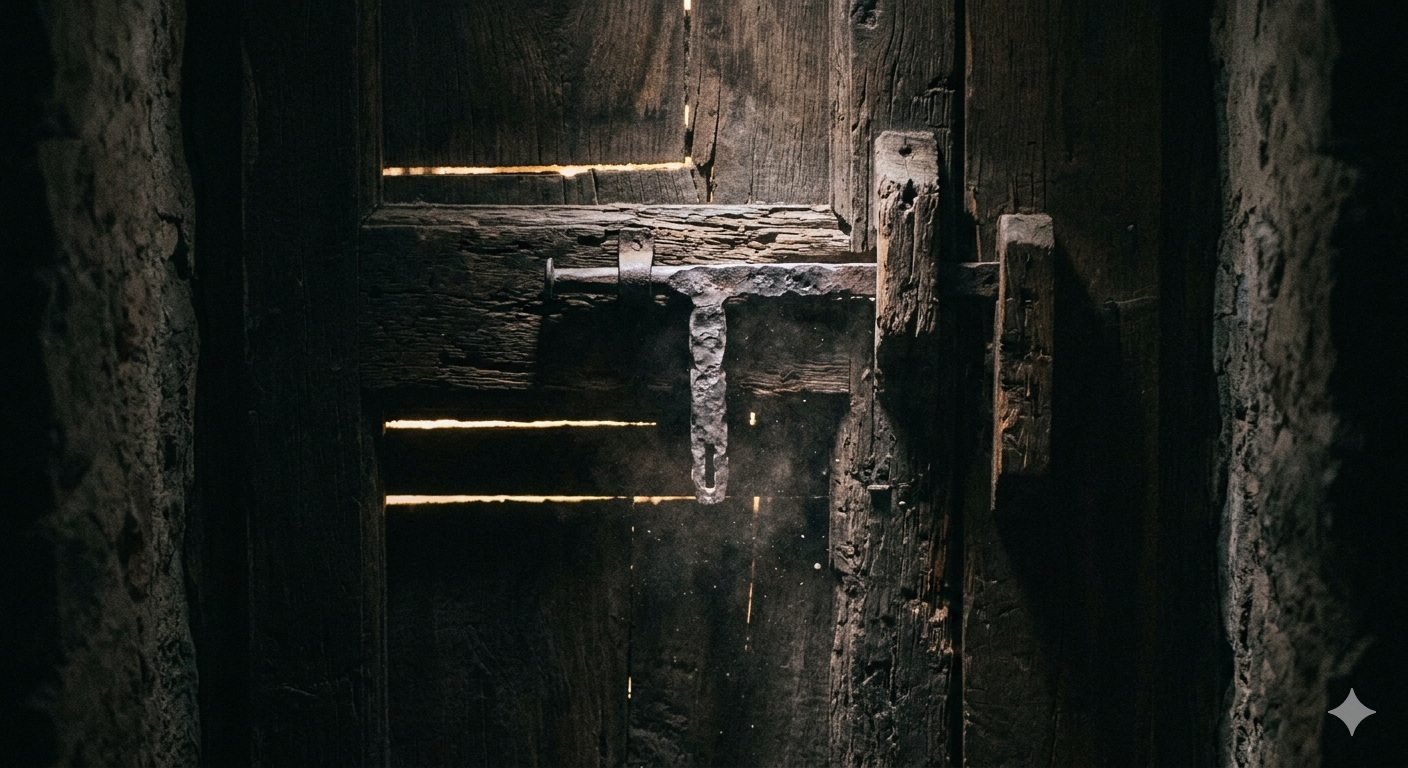
The doors were locked.
That’s where this story starts. Not with triumph. Not with a celebration. With a group of people huddled behind locked doors, afraid. It’s the evening of the resurrection and the disciples — the ones who had been with Jesus for years, who had heard him teach, who had watched him heal — are hiding.
Jesus comes through the locked doors anyway.
He doesn’t knock. He doesn’t wait for them to be ready. He stands in the middle of the room and says: Peace be with you.
Not: where were you when they arrested me? Not: why did you run? Not even: do you believe now?
Just peace. Twice.
And then he breathes on them. Gives them the Holy Spirit. Sends them out the same way the Father sent him.
Thomas wasn’t there.
We don’t know why. The text doesn’t tell us. Maybe he was grieving differently. Maybe he couldn’t be in a room full of people. Maybe he just needed to be alone with what had happened. Whatever the reason — he missed it.
And when the others told him what they’d seen, he said the thing that got him named for all of history as the doubter:
Unless I see the mark of the nails and put my finger into the nailmarks and put my hand into his side — I will not believe.
We’ve been hard on Thomas for two thousand years. But I want to sit with what he actually said for a moment.
He didn’t say he wouldn’t believe under any circumstances. He said he needed to see. He needed evidence. He needed the same thing the other disciples had already been given — an encounter. A real one. Not a secondhand story, however trustworthy the source.
That’s not faithlessness. That’s honesty.
A week passes. The disciples are inside again. Thomas is with them this time.
Jesus comes through the locked doors again.
And he goes straight to Thomas.
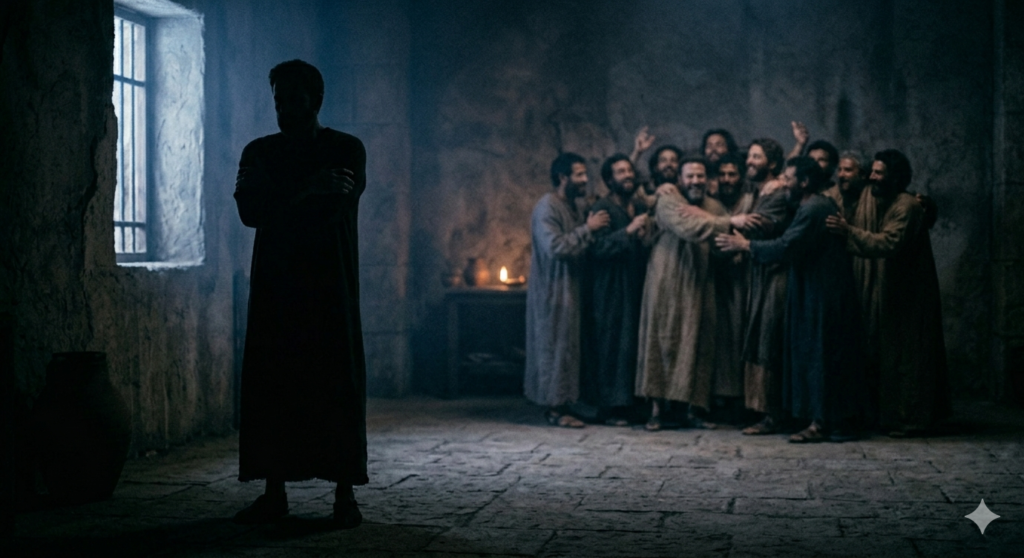
He didn’t argue with him. He didn’t lecture him about the nature of faith. He didn’t make him feel small for asking. He showed him his hands.
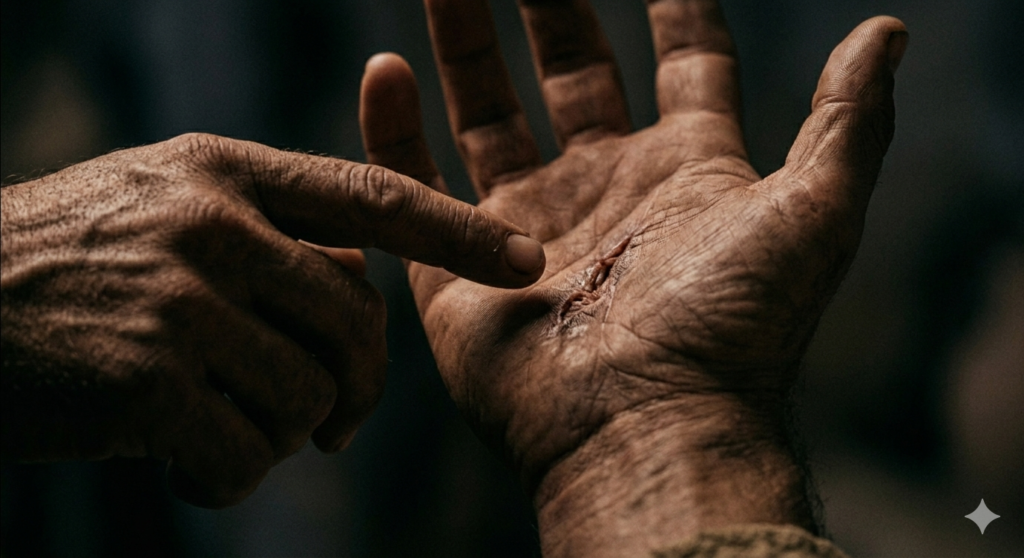
Put your finger here. See my hands. Bring your hand and put it into my side. Do not be unbelieving, but believe.
We don’t know if Thomas actually touched the wounds. The text doesn’t say he did. What it says is that Thomas saw Jesus — and responded with the most complete profession of faith in all four gospels:
My Lord and my God.
Not just Lord. Not just teacher or rabbi or even the Christ. My Lord and my God. Eight words. The whole thing, named at once, by the one who had refused to believe without proof.
Jesus says something then that has always felt like it was written directly for us — for everyone reading this two thousand years later who wasn’t in that room:
Blessed are those who have not seen and have believed.
That’s us. Every person who has ever come to faith without a locked room and a risen body standing in it. Without the nail marks to touch. Without the breath on our face.
We are the ones he was talking about.
Which means our doubt is not disqualifying. Our need for evidence is not shameful. Our honest I will not believe unless is something Jesus walks through locked doors to meet.
He came back for Thomas. He didn’t send a message. He didn’t ask someone else to explain it more convincingly. He came back. In person. Through locked doors. One week later.
He will come back for you too.
a gentle practice
Name one thing you’ve been honest with God about that you haven’t said out loud to anyone else. You don’t have to say it out loud now. Just let yourself know that you’ve said it — and that the doors are not too locked for what comes next.
closing prayer
Lord, come through the locked doors. The ones we’ve closed out of fear, out of grief, out of the particular exhaustion of hoping for something that didn’t happen the way we thought it would. Meet us where Thomas was. Show us your hands. We want to believe. Hope on repeat. 🍞
Where have you been hiding behind a locked door, waiting for something you’re almost afraid to hope for?